
Highlights:
This growing business trades at under 7x EBITDA in a sector where multiple buyouts have gone off at 12x or more.
There are some concerns around the balance sheet in the context of a long-delayed asset sale.
But with a closer look, those concerns are manageable. And there are simply many ways for this stock to win.
As a value investing play, environmental services company Enviri NVRI 0.00%↑ has it all. The fundamentals look attractive, of course. But there’s also a turnaround, a transformation, regulatory tailwinds, a possible business sale as a catalyst, and even a bit of ‘sum of the parts’ valuation.
Of course, the stereotypical value investing play is somewhat messy, and NVRI is no different. The turnaround has been delayed, at least in part. The balance sheet is overleveraged, and the catalyst to fix it has been delayed several times — and may not arrive at all. An ugly chart adds to the sense that, like so many value plays of late, NVRI might work well on paper, but simply not in practice.
But even given those challenges and financial leverage, valuation has reached a point where those risks seem worth taking. There are two attractive businesses here. As the Enviri story gets simplified, those businesses will shine through, creating a path toward significant upside.
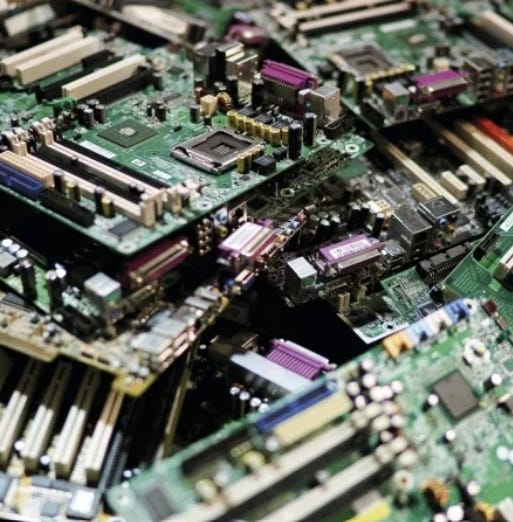
source: Clean Earth / Enviri
Introducing Enviri
Enviri’s roots run back to the 1850s, and the creation of the Harrisburg Car Manufacturing Company. (That’s ‘car’ as in railcar, obviously.) That business eventually turned into Harrisburg Steel, which about 100 years later went public on the New York Stock Exchange as the newly renamed Harsco.
Like many manufacturing companies of the era, Harsco was aggressive in moving into and out of different industries. At various times, the company built boilers, manufactured railway equipment, provided scaffolding to construction companies, and produced tracked vehicles for the United States military. Over time, the focus has steadily narrowed back toward the steel industry, albeit by providing services to the industry instead of being a manufacturer itself.
In recent years, Enviri — the company changed its name from Harsco last year — has pivoted toward being a pure-play environmental business, one which for now operates in three segments. The legacy business is still represented by Harsco Environmental. HE, as it’s known, serves steel and metals manufacturers worldwide by managing byproducts of production, notably slag and scrap. HE actually transports liquid waste or slag, and processes it to recover additional metal, which is then directed back to the customer for manufacturing use. It also manages scrap, while providing other services such as materials transport and the cleaning of furnaces.
The division operates at roughly 150 sites in 30 countries. It also uses waste materials to manufacture a number of recycled products, such as asphalts, roof granules, and abrasives. HE also includes Altek, acquired in 2018, which provides waste management services for the aluminum industry.
The Clean Earth segment was built off of two acquisitions in 2019 and 2020: the namesake business for $625 million and the Environmental Solutions (ESOL) business of Stericycle SRCL 0.00%↑ for $463 million. The two deals coincided with the divestiture of three manufacturing businesses, which in part funded the acquisitions. (Though, as we shall see, only in part.)
The combined business offers specialty waste management in the U.S. to corporate customers in a variety of industries. It treats, processes, and recycles hazardous and non-hazardous waste such as electronics, chemicals, and asbestos. It also has a smaller operation (17% of segment revenue) processing dredged materials contaminated by heavy metals, pesticides, or chemicals.
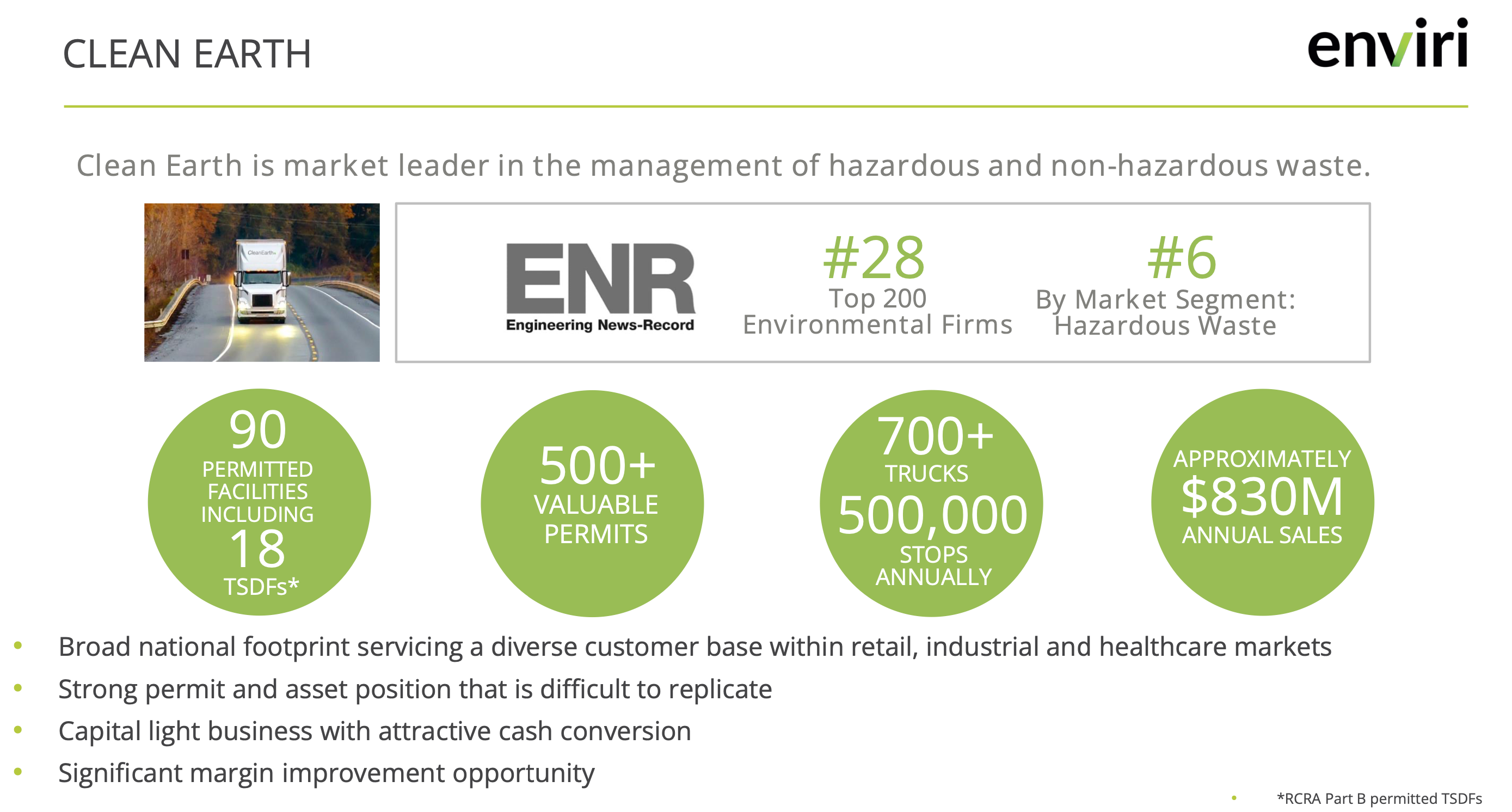
source: company presentation.
CE operates 18 facilities across the U.S., and importantly the business holds about 600 specialty-waste permits. Given heavy regulation, these permits are not easy to obtain, which provides a strong moat for the business.
The third segment is the Rail business, another leftover from the ‘old’ Harsco. Harsco Rail provides equipment, services, and parts for railway track maintenance. It manufactures “stoneblowers”, used to level tracks, along with grinders, tie equipment, and construction equipment. Enviri has been planning to sell the business since 2021 — the Rail segment in fact is accounted for as discontinued operations — but the plans have been stymied by a number of factors, both internal and external.
The Pitch For NVRI
At Friday’s close of $8.22, Enviri has a fully-diluted market cap of $696 million. Net debt is $1.31 billion, putting the enterprise value just a hair above $2 billion.
Enviri guidance for 2024, delivered with the Q4 2023 release at the end of February, is for Adjusted EBITDA of $300 to $320 million. At the midpoint, NVRI trades at 6.5x EBITDA — and it’s important to emphasize that the EBITDA guidance does not include the Rail segment (which, again, is held for sale and thus treated as discontinued operations).
Bottom-line figures admittedly are much less constructive in terms of valuation. Free cash flow is guided to $20-$40 million this year, suggesting at least a high-teens multiple for a heavily leveraged business. And leverage is a concern: at the midpoint of guidance, net debt is still about 4.2x EBITDA.
But the proposed sale of the Rail segment should help the balance sheet, and importantly reduce the interest expense which is currently crushing free cash flow. Cash interest expense in 2023 was $101.5 million — high enough that some of the interest isn’t even tax deductible under the section 163(j) limitation. The converse of that, however, is that the initial dollars of reduced interest expense drop to free cash flow at 100%.
Interest on the revolver is currently over 7%, so a ~$200 million sale of the rail business would save ~$15 million in annual interest expense. That figure is a rough estimate, but management projects close to $30 million in segment Adjusted EBITDA this year; a 7x multiple seems potentially conservative. $200 million in proceeds, applied to debt reduction, would get 2024 free cash flow to $35-$55 million, putting P/FCF in the 13x-20x range. Those multiples would be more attractive in the context of an improved balance sheet: net leverage in this model drops down to 3.6x.
Those are both hugely attractive multiples for the remaining business. This business, after all, is growing. Revenue in HE grew 7.5% in 2023, and CE jumped 12%. 2024 EBITDA guidance suggests growth of 6% at the midpoint, and longer-term demand for CE, in particular, should grow. Federal intervention is a tailwind: the Biden Administration last month released $1 billion in spending for so-called ‘Superfund’ sites, and new rules around PFAS (per- and polyfluoroalkyl substances) should drive demand for Clean Earth services (though management has not put any such revenues into the 2024 outlook).
Unsurprisingly, investors have been optimistic toward the industry. European private equity firm EQT has had its portfolio company Covanta acquire Circon Holdings in 2023, and a EQT fund took a majority stake in Heritage Environmental Services earlier this year. Both companies are direct rivals of Clean Earth.
Clean Harbors CLH 0.00%↑ is another competitor (at least in part of its business); it trades at ~12x 2024 Adjusted EBITDA, with a similar projected growth rate (7% at the midpoint). Republic Services RSG 0.00%↑ took out U.S. Ecology ECOL 0.00%↑ at 14x EBITDA in 2022. Private transactions too are going off at double-digit EBITDA multiples.
Again, NVRI is trading at under 7x — even assuming zero contribution from Rail. Simply put, a 10x multiple on the low end of 2024 guidance, and EV jumps from $2 billion to just over $3 billion, and the market cap jumps from ~$700 million to $1.7 billion, suggesting 140% upside. Anything more (a higher, but still sector-appropriate multiple, and/or proceeds from a Rail divestiture) suggests a clear path toward a triple.
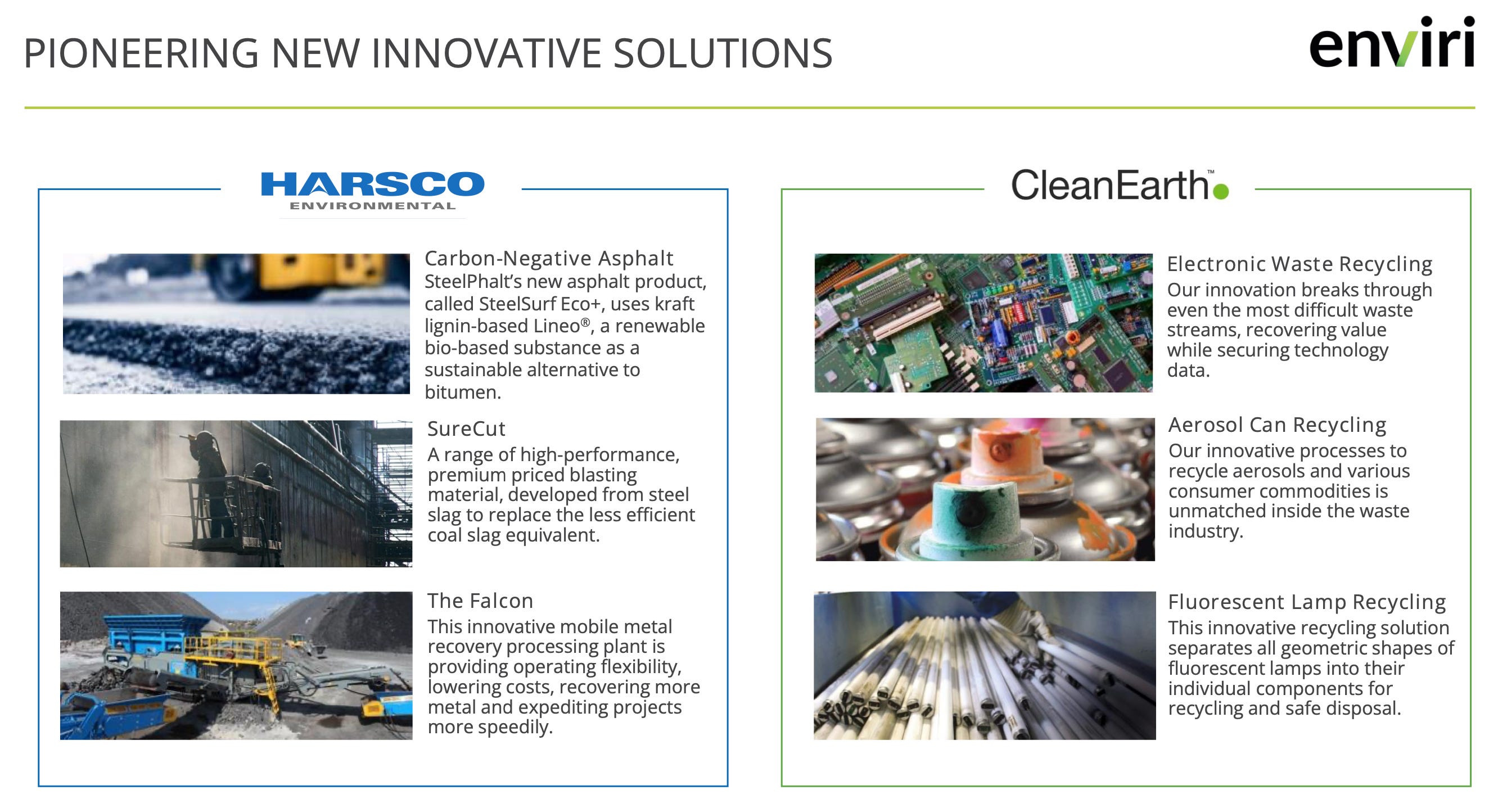
source: company presentation
The Bear Case
To be fair, the story probably isn’t quite that good. There are some negatives to consider here.
The first is that while a double-digit multiple does seem appropriate for the sector, Enviri’s entire business is not part of that sector. The Harsco Environmental business is much more steel-focused, and investors are not clamoring to race into the sector. Steel stocks have performed well over the past year, but generally trade at single-digit EV/EBITDA multiples.
Assign that kind of multiple to the HE segment, and the valuation here doesn’t look quite as enticing. 7x-8x for for HE (62.5% of 2023 segment-level Adjusted EBITDA) and 10-11x for CE suggests a blended multiple of 8.5x or so.
That’s still attractive against the current valuation — 8.5x the low end of 2024 guidance still gets EV to ~$2.6 billion, and suggests about 85% upside in the stock. But bears might also argue against that guidance — or even valuing the rail business at zero. There are some management concerns too.
As noted, Enviri has been trying to sell the rail business since 2021. By the Q1 2023 report, the company seemed ready to go, and management promised a sale by the end of the year. But a series of loss-making contracts with three European rail providers seem to have scuttled the deal. Those contracts were supposed to be renegotiated by now — but only one has been. On the Q4 call, chief executive officer Nicholas Grasberger even seemed to float the idea of keeping the business.
The endless promises around Rail aren’t new. Back in 2019, Enviri projected EBITDA in the business would triple to $100 million. Grasberger is now saying that Rail is at “an inflection point”, but the inability to renegotiate the deals (which are creating large forward loss provisions) clearly has blocked a potential sale and kept Enviri on relatively shaky financial footing. Enviri’s debt facility now has a covenant keeping net debt below 4x; that calculation is more forgiving than using reported Adjusted EBITDA, but a bad quarter or two could easily trip that covenant. The exposure to the cyclical steel industry at a time of seemingly wavering construction demand worldwide means a bad quarter or two is not out of the question.
There’s even the question of just how much growth these businesses are generating. 2023 performance does look strong, but both segments posted profit declines in 2022. Management has brought down the long-term margin target for Clean Earth (to 15% from 20%), and the multi-year profile isn’t that impressive. At the time of acquisition, Clean Earth was expected to generate $65 million in EBITDA in 2019, and the Stericycle operations $35 million in 2020. That combined $100 million grew to $125 million in 2023 — not quite the consistent mid-single-digit growth seen elsewhere in the waste management industry.
Finally, there’s this:
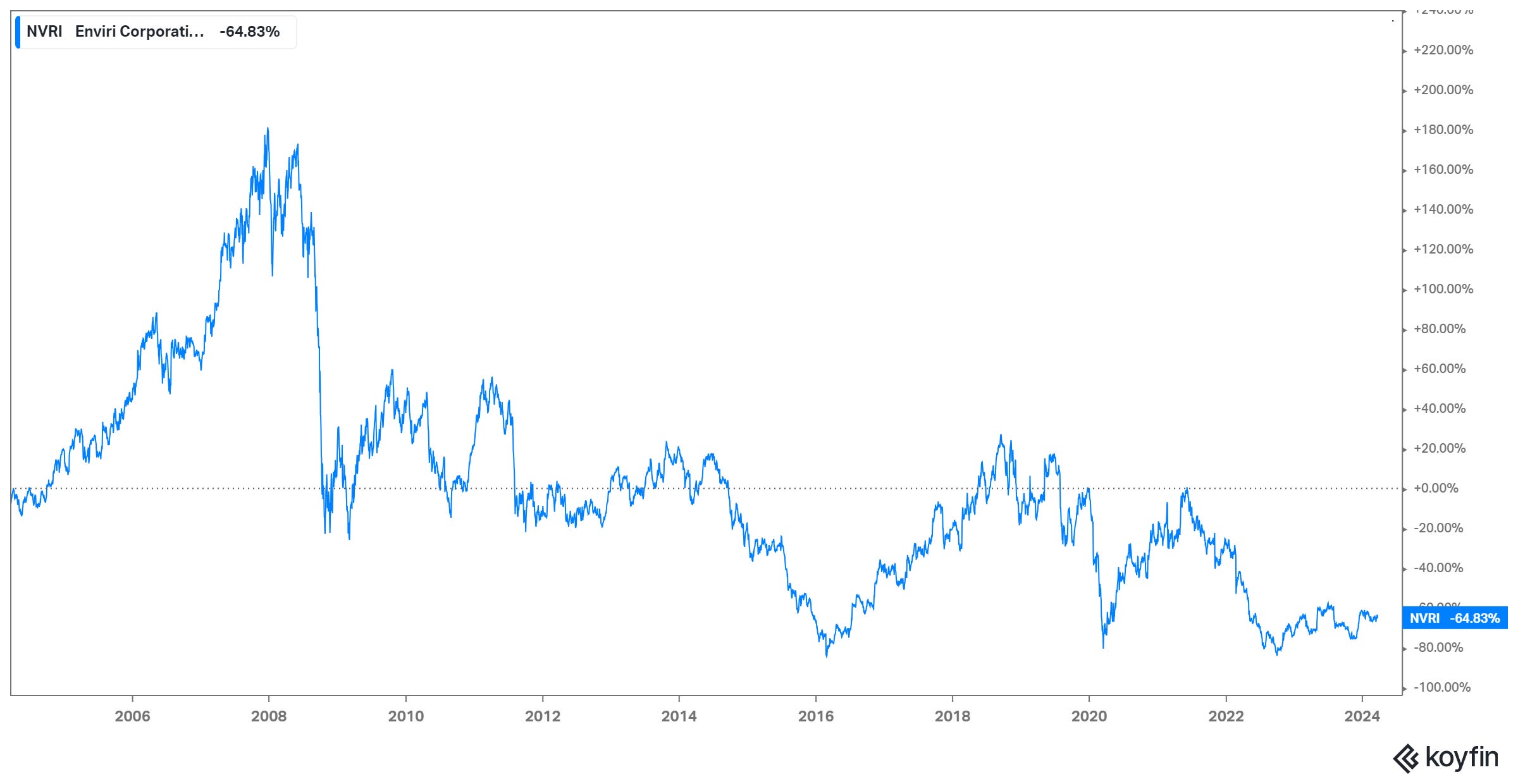
source: Koyfin; 20-year chart
This is a stock that, last year, hit a 38-year low. Grasberger has been in charge for the last ten of those years. And though the CEO specifically said on the Q4 call that his company’s stock price was too low, it’s hard to argue from the chart that the pivot to a purely environmental focus has worked. And as we’ve written before (and as modern value investors know all too well) of late stocks that haven’t worked in the past often don’t wind up working in the future.
A Closer Look Looks Much Better
But NVRI seems like it could, and probably should, be an exception to that rule. And one core reason for optimism is that, unlike a lot of value plays at the moment, the story actually seems better with a closer look and deeper consideration.
Indeed, where value investors (ourselves included) can get themselves into trouble is by focusing too much on a few positive attributes — most obviously, a cheap valuation — and missing the overall picture. Here, however, if you step back, the overall picture actually does seem brighter, and it’s the bear case, not the bull case, that starts to look thin.
For instance, while the stock has done poorly, the business has done reasonably well. Pro forma Adjusted EBITDA in 2019 was $315 million1. The figure in 2023 should be $335 million to $340 million.
Obviously, that’s about 1% annualized growth — but in the context of the pandemic and Russia’s invasion of Ukraine, that’s hardly terrible performance. It’s not a coincidence that consolidated Adjusted EBITDA plunged in 2022. Input and labor costs soared, and it took time for management to institute price increases (in part because of the nature of contracts, particularly in the Environmental segment).
In that context, the seemingly slow profit growth in the Clean Earth segment is actually a positive. We’d argue that mid-single-digit profit growth through the environment of 2021 to 2023 is a reason for optimism, not pessimism.
It’s also worth noting that management said 2022 price increases only covered costs; in 2023, Clean Earth segment EBITDA margins jumped 520 basis points to over 13%. Cost-cutting programs helped as well, but clearly this is a business with pricing power. We’d point out in that context that NVRI is trading at ~15x 2024 EBITDA for that segment alone. In fact, somewhat incredibly, the equity is trading at about 18x pre-interest free cash flow from a standalone Clean Earth, even including all of Enviri’s corporate expenses2.
As for management, the sales process in rail has been poor. The communication has been poor. But the interruption has been caused to some degree by inflation. Meanwhile, the strategic pivot hasn’t yet helped the stock, but it hasn’t been a failure. Through acquisitions Enviri paid a combined $1.08 billion for $125 million in 2023 Adjusted EBITDA — and $93 million in EBITDA less capex. Those at least were good acquisitions, and in a bullish scenario they may well prove to be great ones.
If anything, the decline in the stock only shows that the move away from the legacy businesses simply had to happen. NVRI stock hasn’t necessarily tanked because the acquisitions were bad; it’s been the legacy business (notably in rail) that has driven pretty significant multiple compression. That compression from 9.0x EV/EBITDA at the end of 2019 to the current 6.5x, is what is responsible for the plunge in the stock price.
And while the valuation is cheap from a headline basis, on a continuing operations basis it looks ridiculously cheap. As discussed above, even arguing for a blended multiple in the high single digits NVRI can still double in two years. Grasberger said on the Q4 call that free cash flow ex-Rail was $185 million in 2023, suggesting a P/FCF multiple below 4x.
At some point, the drag is going to be gone, and what will be left is a legacy business with a multi-decade history and strong cash flow. Plus an exceptionally attractive business with strong growth and external tailwinds. There’s absolutely a world in which the multiple applied to those businesses is over 10x EBITDA and 20x free cash flow, since that’s what investors are happy to pay elsewhere. However, even if those multiples are lower, investors can do quite well.
As of this writing, Vince Martin has no positions in any securities mentioned. He plans to initiate a position in NVRI this week.
Disclaimer: The information in this newsletter is not and should not be construed as investment advice. Overlooked Alpha is for information, entertainment purposes only. Contributors are not registered financial advisors and do not purport to tell or recommend which securities customers should buy or sell for themselves. We strive to provide accurate analysis but mistakes and errors do occur. No warranty is made to the accuracy, completeness or correctness of the information provided. The information in the publication may become outdated and there is no obligation to update any such information. Past performance is not a guide to future performance, future returns are not guaranteed, and a loss of original capital may occur. Contributors may hold or acquire securities covered in this publication, and may purchase or sell such securities at any time, including security positions that are inconsistent or contrary to positions mentioned in this publication, all without prior notice to any of the subscribers to this publication. Investors should make their own decisions regarding the prospects of any company discussed herein based on such investors’ own review of publicly available information and should not rely on the information contained herein.
$283 million including the pre-acquisition period for Clean Earth, per the Q4 2019 release, plus ~$32 million from the Stericycle business (based on the aforementioned expectations, issued before the novel coronavirus pandemic, of ~$35 million in 2020).
$125 million less $44 million in corporate expense gets to $81 million. $48 million in D&A leaves $33 million in
I'm trying to follow along with your analysis.. hopefully teaching myself a bit of stock analysis along the way... To that end, can you share from where you pull the fully diluted share count? Thank you.
Could Trump doing well in the polls dampen the bull case? I mean could it throw the entire environmental group under the bus for a while?